

Relief for Dallas Health & Human Services Dept.
Project Overview
Design Research and Strategy
I created seven research guides to deliver a set of full-service design strategy tools for Dallas County Health and Human Services (HHS).
Goals: Support refugee medical onboarding, engage support systems, and align localized non-profits.
The results showed that caseworkers are the most critical to medical engagement, yet medical records, training, and community resources can alleviate the load for all.
Outcomes:
County Training Documents
Client and User Product Flow
Dallas County Engagement Plan
Roles
Design Lead and Project Manager
Responsibilities
Team lead, survey creation/delivery
Time
4 Months
Industry
Healthcare and Social Work
Partners
Dallas County - Refugee Health Services, International Rescue Committee
The Process
-
Background Research
Research on public health and current resources offered to partners and more
-
Surveys & Interviews
Research guides for the partners to engage and serve patients
-
Workshop & Market Research
I engaged stakeholders in research to gauge pain-points and gaps in services
-
Prototype & Next Steps
I developed a set of recommendations for the county and how to scale the product
Background Research
I learned and evaluated patient needs by interviewing the clinic Program Manager at Dallas’ Health and Human Services - Refugee Clinic on their needs within their medical resettlement process.
Structured evaluation of patient needs was started by an observation of health systems, resettlement services, and contemporary issues with general medical visits.
Patient interviews after this point were facilitated by myself and staff at Dallas’ Health and Human Services clinic.
Seven Components of Whole Health
I focused on three of the 7 components of Whole Health specific to refugee health services.
Community
Physical
Self-Care
Refugee Health Process
Family onboarding means caring from a legal and medical perspective as shown within US Resettlement Documentation
Screening
Arrival
Resettlement
Surveys and Interviews
Via observation of current appointment scheduling, patient use of transit systems, resettlement services, and some medical visits by refugees, I refined research plans and started gathering product features.
Initial Insights:
Patients prefer family-oriented appointments
Services outside of health can feel rushed or impersonal
Refugees tend to have inconsistent awareness of services
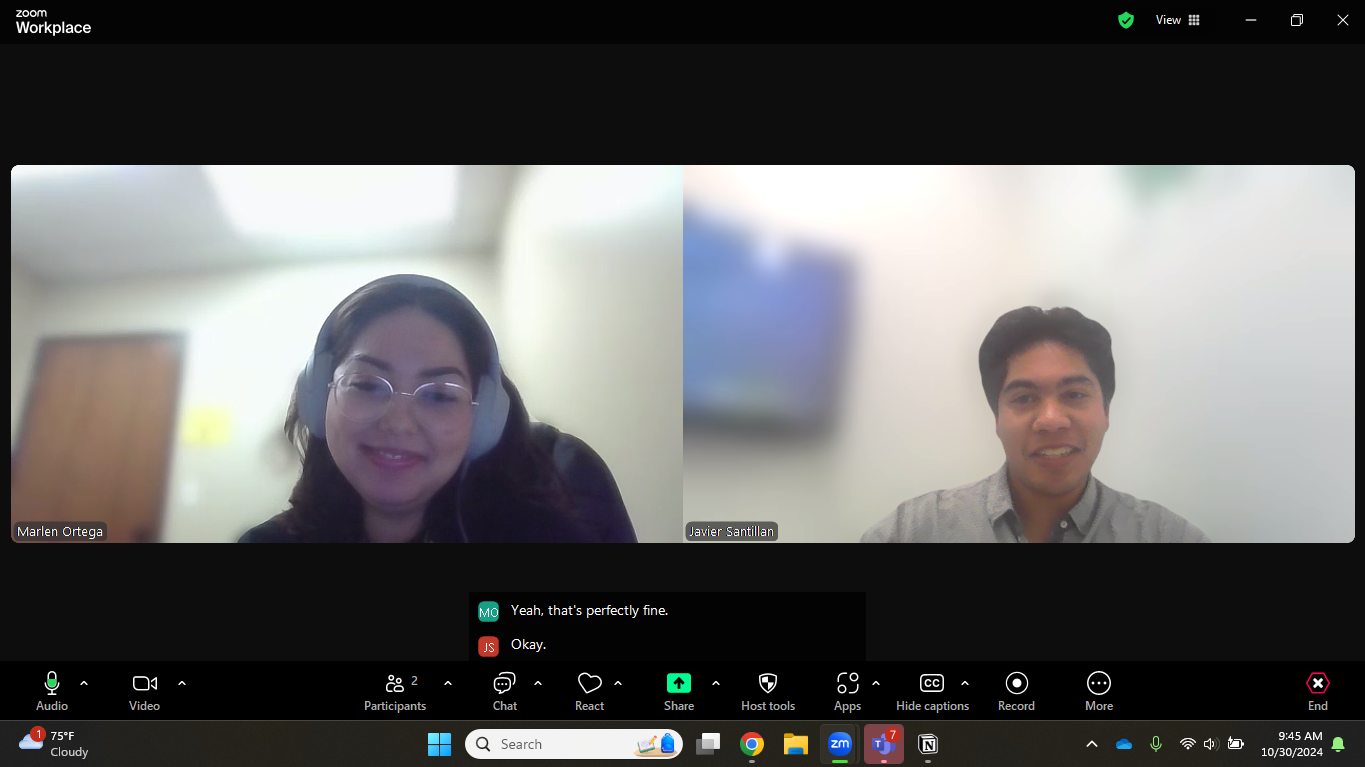
After interviewing caseworkers, clinic managers, and new/current patients I found the need to host a workshop to align perspectives and priorities.
Appointment A/B Test
I sought to test out the following topics via this experiment
Patient Communication Gauge
Modality and Messaging
Contextual Inquiry Interview
This interview sought out to explain the following:
Patient Appt. Scheduling Process
Scheduling Modality and Effectiveness
Workshop and Market Research
The workshop helped stakeholders identify common goals, issues, and potential improvements between their organizations.
Goals:
Align resettlement agencies and medical orgs
Re-define common goals in resettlement
Establish new arrivals into their community
Partners in Progress

Outcomes:
Features on community resources available to clients and caseworker networks in the area
Re-defined caseworker/patient tasks in the resettlement process


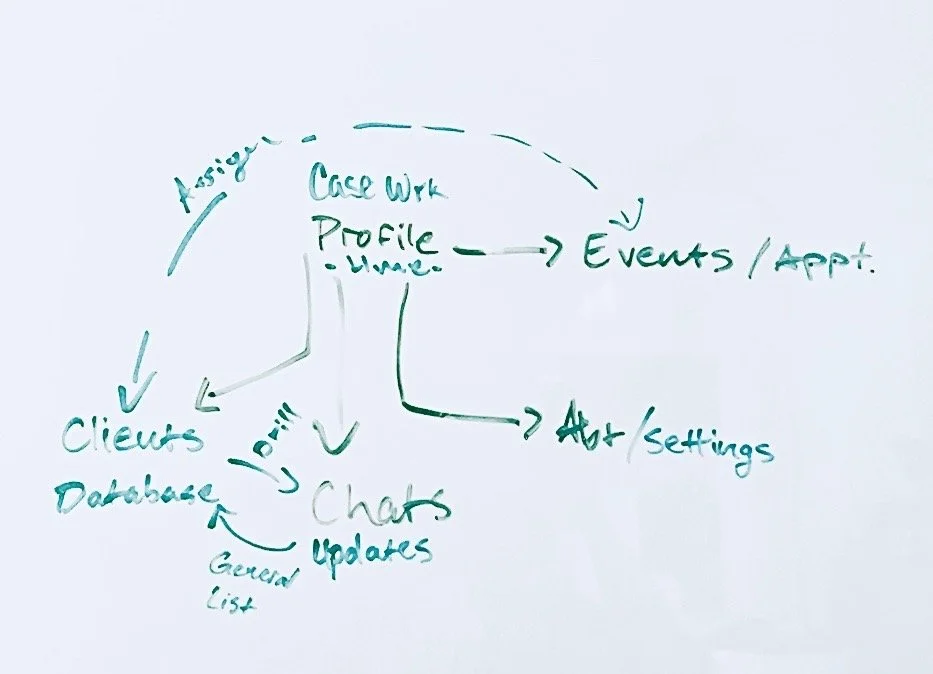
Paper Prototype:
Initial caseworker training workflow for the Relief mobile app
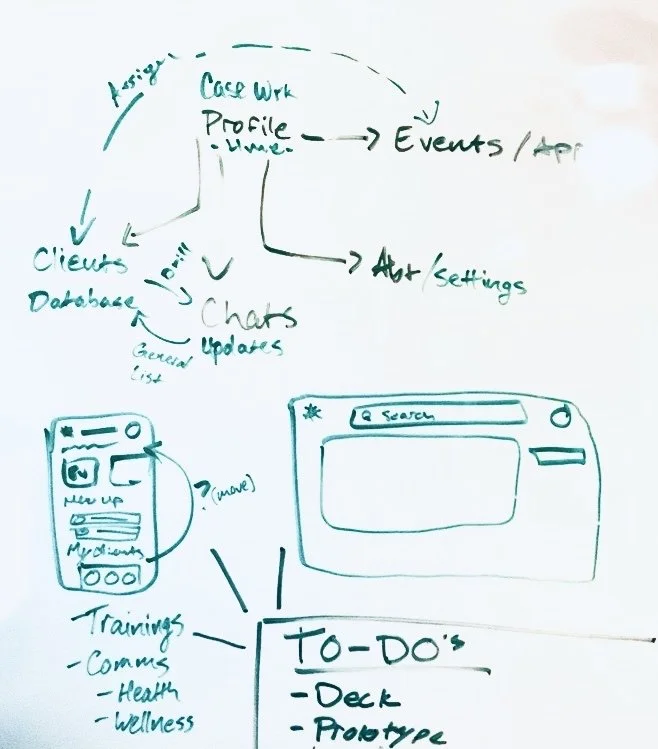
Initial caseworker mobile/web wireframes for Relief training module

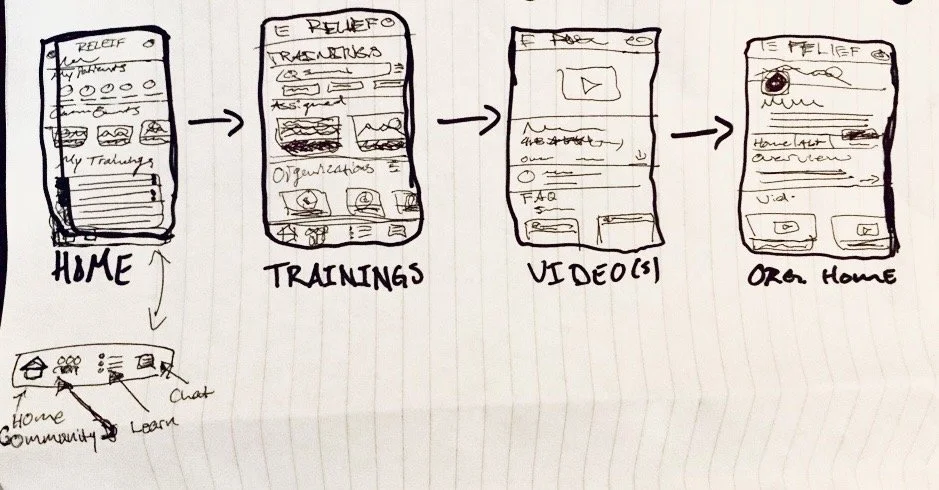
Mobile wireframe for caseworkers in the Relief platform
Prototype and Next Steps
Caseworker Training
Re-establishing case worker training into a centralized platform for different organizations involved in resettlement managed by each respective governing body
New Client Documents
I gave a walkthrough to some caseworkers and medical providers in the organizations
-
Care Network Engagement
Client, Provider, and Caseworker Portals
Medical and Support Onboarding for refugees/resettled populations
What I learned
-
Building a vision of research and collective mission is inmesuarably valuable with teams that are new to design strategy
Leadership and Support
-
Group research should prioritize consistency, worksheets, and the ability to iterate on relevant data gathering
Data Capture Tools
-
Brining together external partners always requires extra time, planning, and a shared value proposition
Partner Engagement